Each Cinematic Chiasmus article I write explains the what and how of a film’s symmetrical structure, but they don’t tend to go into the why. Why are these films a chiasmus, and what does that say about them? I’d like to talk about that for each film in the How to Train Your Dragon trilogy by explaining what each one’s turning point means to the larger film.
How to Train Your Dragon
The first How to Train Your Dragon brilliantly portrays two outcasts from opposing worlds discovering that they have a lot more in common than they ever thought possible. They come together in a unique way that helps them realize that they’re stronger together, and they need each other’s strengths to survive. And this is perfectly depicted by the chiasmus’ turning point at Hiccup’s first flight.
W. Hiccup struggles to fly on Toothless, crashes into rocks, and falls off the dragon to save his cheat sheet
W. Hiccup reconnects with Toothless, throws away his cheat sheet, and perfectly navigates through dangerous rocks
 When he’s connected to the dragon Toothless, Hiccup is able to soar straight up into the air and reach new heights the two could never accomplish separately. But when they get disconnected, they both fall helplessly to the ground, and Toothless even whips around and accidentally hurts Hiccup and pushes him away. Thankfully, Hiccup is able to stabilize himself, push past his fear, and reforge a connection with Toothless that takes them safely through a maze of deadly dangers.
Is there not a metaphor there?
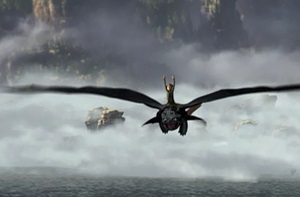 Have the dragons not been inadvertently causing all kinds of harm to the Vikings for generations? And isn’t Hiccup the first Viking (other than his mother, but no one knows that yet) to forge an unlikely friendship with a dragon that enables him to defeat a much larger threat to both dragons and Vikings? Even Toothless’s injury is metaphorical. When he’s separated from Hiccup, he can’t fly. Only by joining forces and using their complementary talents are they able to overcome their deficiencies.
And at the end of the film, we learn that Hiccup and Toothless are two halves of the same whole. So it makes sense that the turning point of the film would showcase how they need to be united.
How to Train Your Dragon 2
The main themes of How to Train Your Dragon 2 revolve around control vs. letting go, the love between a husband and wife, and a passing of the torch. Those are all on display in the turning point of its chiasmus. This one was discovered by a reader of mine named Jo, not me.
S. Stoick finds Hiccup, and along with Gobber, takes Hiccup down a path to exit the dragon sanctuary
S. On the way out of the dragon sanctuary, Hiccup and Gobber watch as Stoick finds Valka and reunites with her
 Up to this point in the sequel, two big things have been going on around Hiccup. His mother Valka has been apologetically reconnecting with him, and his father has been worriedly searching for him. All of this changes at the turning point when Stoick and Valka see each other for the first time since Hiccup was a baby.
Suddenly, the story shifts into a new gear to explore the long-lost love of a couple of stubborn Vikings. Hiccup is happy to take a backseat and watch his parents interact. Stoick slows down for the first time in his life and just takes time to process his emotions.
 The peace and joy of this happy moment don’t last, and tragic events are right around the corner. But the heart of the film is encapsulated in its deeply personal turning point where Hiccup’s parents find each other and rekindle the love they have both carried unbeknownst to each other.
How to Train Your Dragon: The Hidden World
Finally, we come to How to Train Your Dragon: The Hidden World. This film is about showing the main characters their opposite, for better or worse. Here’s how that plays out at the turning point.
X. Hiccup attempts to surprise Grimmel by sneaking into his fortress. He wants to stop Grimmel from stealing or killing any more dragons
X. Grimmel surprises Hiccup by anticipating his sneak attack. He admits that he has killed numerous Night Furies and has no intention of stopping
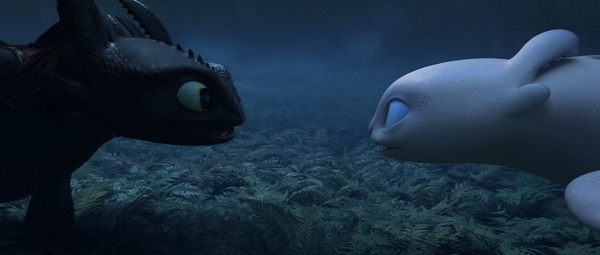 Up to this point in the film, Toothless has been experiencing the exhilaration of finding love with a Light Fury who is everything he’s not: white instead of black, possessing magical powers he’s never seen before, physically whole but psychologically scarred, and graceful rather than brash.
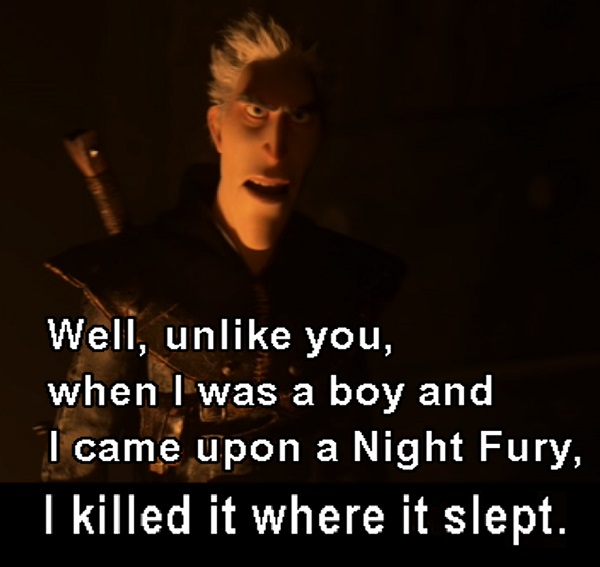 Meanwhile, Hiccup has been up against someone who is also his opposite, but not in a good way. At the turning point, Grimmel the Grisly tells Hiccup who he really is: a dark version of Hiccup. If, in the first film, Hiccup had actually cut Toothless’s heart out and delivered it to his father, he would have been hailed as an unrivaled hero in his village for killing a Night Fury. And he would have turned into someone dark and twisted like Grimmel.
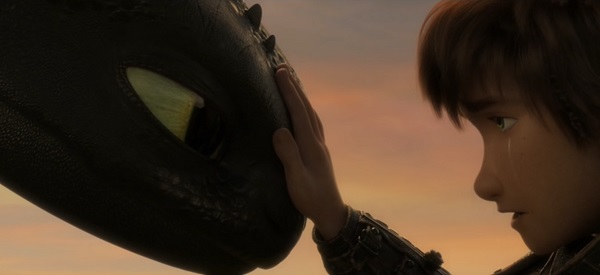 Instead, Hiccup chose a different path and found lasting friendship, which is alien to Grimmel. Using one’s intellect to attack is always going to produce more dramatic results than using it to defend against attacks. Hiccup might be younger, less ruthless, and more desirous to find a peaceful solution, which puts him at a disadvantage to Grimmel. But he has hidden strengths Grimmel can’t match, like his ability to make unlikely friendships.
Even though Hiccup is unable to redeem Grimmel, he is able to finally bond with the Light Fury, which proves to be his savior and Grimmel’s demise at the climax of the film.
Word to the Why’s
Isn’t it interesting that the main point of a chiasmus always comes in the middle, not the beginning or end? That is part of what makes this such a complex and beautiful storytelling technique. The true meaning of a work of art is buried deep inside, and it only comes out with an intensive search. The thesis and summary don’t come at the beginning and end, respectively, like any good five-paragraph essay. They come at the center.
What do you think of my interpretation of each film’s turning point and theme? Did I miss something important, like the battle between Hiccup and Stoick’s ideologies in the first film, the deadly duel between Alphas in the second film, or the weird relationship between Snotlout and Hiccup’s mom in the third film?
I welcome more words to the why’s of the chiasma in these films. The How to Train Your Dragon trilogy is a masterpiece, and I’m grateful to be able to see why they work so well. The three films are all symmetrical, and their main theme is right in the most important part: the middle.
This is the Deja Reviewer bidding you farewell until we meet again.
All images are the copyright of their owner.

Want to Support the Deja Reviewer?
If you’d like to support the Deja Reviewer, please consider donating a few dollars to keep this site going strong. I’ll even send you an original joke if you do! Try it, and prepare to enjoy a good chuckle.
$5.00


 Deja Reviewer
Pingback: The Lion King’s Circle of Life Forms a Chiasmus | Deja Reviewer
Pingback: 60 Examples of Cinematic Chiasmus | Deja Reviewer