I love The Sound of Music. It’s one of my favorite films. And I recently discovered something special about it I would like to share with you. Each song in The Sound of Music seems to represent a unique aspect of love. Now that I’ve seen it, I can’t help but apply it to every song in this film.
Let’s go through each song in The Sound of Music and see how love shines through in all of them. By the end, we could easily call it “The Feeling of Love” just as much as The Sound of Music.
The Sound of Music – Longing for Love
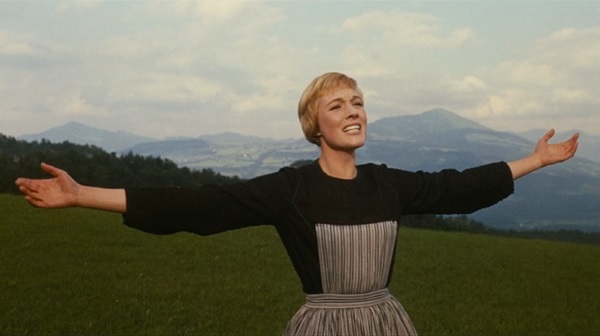 The first line of the movie is Maria singing, “The hills are alive with the sound of music.” She goes to the hills when she’s lonely to commune with nature and feel reenergized by the peace she finds there. I think what she’s truly singing about is a feeling in her heart that she struggles to put into words. She longs to belong somewhere, and she doesn’t feel at home even in a place dedicated to God. She doesn’t know what’s wrong with her, and she doesn’t yet understand that she keeps longing for love.
To back up this interpretation, let’s look forward in the film to this song’s reprise. Maria has just violated every rule Captain Georg von Trapp gave her in connection to caring for his seven children. Yet she refuses to back down and she tells him all about his children’s worries and how they wish he would just talk to them. She’s learned more about his children in less than a month than he’s learned about them in years. He tells her to get out, but then he hears something that stops him dead in his tracks.
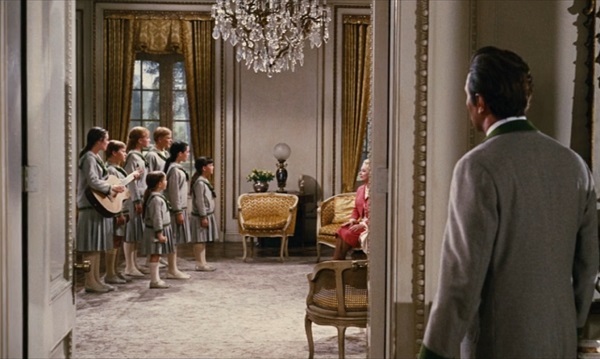 Georg’s children are all singing “The Sound of Music” in perfect harmony. Its melancholy tune stirs something deep within him, and he begins to sing along. It’s as if the words Maria sang at the beginning touched a nerve with him, and it reminded him of something most precious and important. His whole countenance changes, and he tells Maria that this is the first time that music has returned to his home since his wife died several years ago.
What he’s really saying is that this is the first time that love has returned to his home since his wife died. He had forbidden singing or personal connections with his children for a long time. Instead of singing, he used a whistle to communicate with his children. A whistle is a poor substitute for love. Maria brought love and music back into the von Trapp home.
Maria – Misunderstanding Love
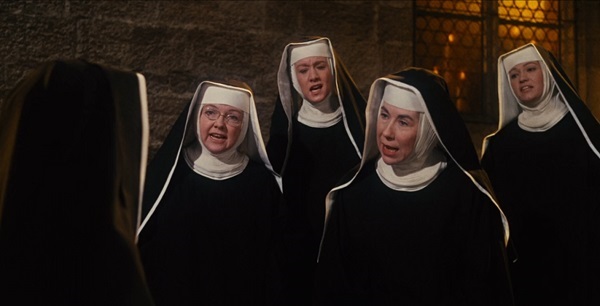 What can the song “Maria” possibly have to do with love? It’s all about Nuns arguing over Maria’s good and bad qualities. They go so far as to call her both an angel and a demon. As it turns out, this is all just one big misunderstanding. You see, the Nuns are judging Maria on how she conforms to the expectations of a Nun. What they don’t yet see is that Maria is meant for a different role: a wife and mother.
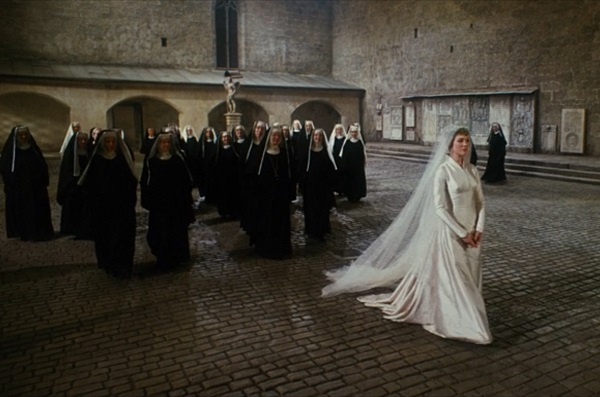 The reprise of “Maria” helps to clear up the misunderstanding because the Nuns sing it again as Maria walks down the aisle of their abbey to marry Georg von Trapp. “How do you solve a problem like Maria?” is answered by not trying to force her into a box but freeing her to do what’s right for her. She may not be the best Nun, but she’s really good at bringing love to her husband and his children. The Nuns’ denunciations turn into praise for her ability to follow wherever God leads her.
I Have Confidence – Self-Love
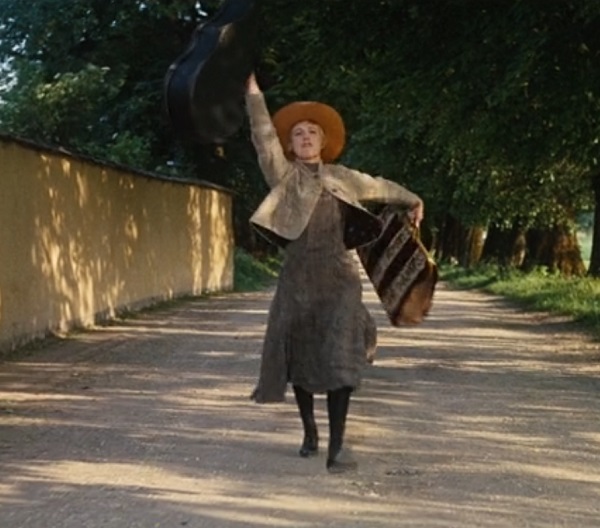 “I Have Confidence” is one of the few songs that has no reprise other than the “Entr’acte,” so we have to take it at face value. Thankfully, it’s easy to interpret as being filled with love. Just a different kind of love than romantic or sisterly love. “I Have Confidence” is all about loving oneself. The second great commandment given by Jesus Christ is to “love thy neighbor as thyself.” To obey that commandment, we first must love ourselves.
Maria is doing that perfectly with this song. She’s nervous about leaving her abbey and going to a house where she’s to be the governess to seven rowdy children. So she sings an upbeat song to boost her confidence. By the end of her journey to the von Trapps’ home, she has managed to quiet her fears through showing greater love to herself than she has ever shown before. And that enables her to give all the love the children need in the coming days.
Sixteen Going on Seventeen – Young Love and Heartache
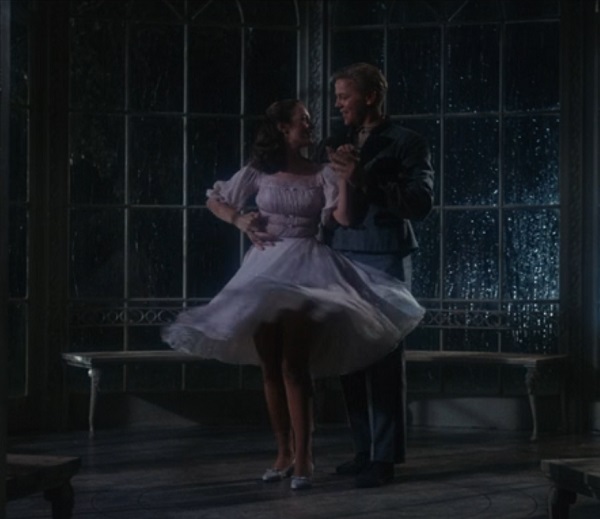 Liesl is Georg von Trapp’s oldest child. She’s 16 years old and anxious to experience new things as a grownup. But change is scary, and she needs someone to help her transition out of childhood. She thinks she’s found just such a guide in the form of Rolfe, an “older and wiser” 17-year-old boy who delivers telegrams to her father.
They sing a delightful song early in the film where they proclaim their budding love for each other. In “Sixteen Going on Seventeen,” they express their hopes and dreams to each other in cute, naïve ways. They have no idea how little they understand about the big, complicated world. Yet they hold onto their love for each other as an anchor in the storms of life.
 Unfortunately, their innocent love doesn’t last. By the end of the film, Rolfe has been persuaded to become an officer in the Nazi regime sweeping over Austria in the 1930s. And he seems to forget Liesl entirely in the process. This breaks Liesl’s heart, and she doesn’t know what to do about losing her first love. The good news is that she now has a new mother, and Maria is able to comfort her by reprising “Sixteen Going on Seventeen” and encouraging her to wait a year or two to trust her heart to someone else.
There’s no rush to find love, especially for one so young. It’s okay to wait for the right moment for it to happen. And when we give our hearts to the wrong person and get hurt in the process, we shouldn’t give up hope or seal ourselves off from love in the future.
My Favorite Things – Love Dispels Fear
When Maria first meets the children, she gets off to a rocky start. They like to play tricks on their governesses because it’s the only way they can get their father to pay attention to them. But Maria refuses to get angry or run away. Rather, she returns love for cruelty and makes the children cry as a result. But their tears don’t last long. At the first sign of a thunderstorm on her first night in their home, the children all come running to Maria’s bedroom seeking comfort.
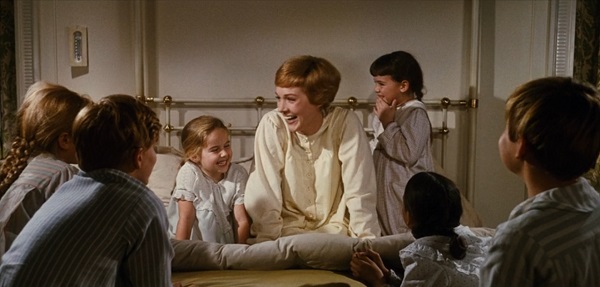 They’re all afraid of the thunder and lightning. But do they seek shelter with their father or each other or anyone else in the house? No. They run to the one person they know can weather any storm they can throw at her: Maria! And she teaches them a valuable lesson with a song called “My Favorite Things.” When bad things happen to us, we can remember things we love to dispel the fear we feel. That reminds me of another quote from Jesus Christ: “Perfect love casteth out all fear.”
Later in the film, Maria leaves the von Trapps’ house and returns to the abbey. Everyone is sad about this decision. When the children are at their lowest point, they sing this song once more to try to cheer themselves up. It doesn’t seem to be working too well until Maria unexpectedly arrives and adds her beautiful voice to theirs. The song felt incomplete without her. By combining their voices, they find that they can overcome any fear. And I think this symbolizes that they all need each other’s love to face all the scary things that are coming in life.
Do-Re-Mi – The Basics of Love
To connect with the von Trapp children, Maria takes them out of their house where she feels intimidated by the expensive architecture and vaulted ceilings, and she brings them into her home territory. They walk through the Austrian countryside, cross rivers, and hike beautiful hills. And then she teaches them how to sing. I think the deeper thing that she’s teaching them is how to open themselves up to love.
“Do-Re-Mi” is probably the cleverest song in The Sound of Music. Maria is able to turn the seven notes on a music scale into fun wordplay. Doe, Ray, Me, Far, Sew, La (a note to follow Sew), and Tea take on new meanings in her delightful song. And there just so happens to be one note for each child to make their own. And just when you think that the song has expended all its creativity, it offers even more.
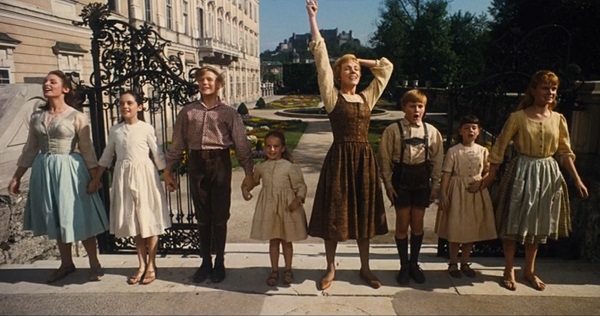 Maria sings “So Do La Fa Mi Do Re” and “So Do La Ti Do Re Do.” The children point out that it sounds lovely, but it doesn’t mean anything. That’s when Maria puts those notes to words. “When you know the notes to sing, you can sing most anything.” In this case, it seems like she’s also saying that when you know how to love, you can love just about anyone, both friends and enemies.
It’s interesting to contrast this with how the Baroness tries to connect with the children. She throws a ball with them in a circle, each one calling out the number of the person they’re throwing it to. This is barely a step up from Georg von Trapp’s whistle, and the children all recognize that she doesn’t really care for them like Maria did. Maria’s love shone through her creativity in coming up with the “Do-Re-Mi” song. She inspired the children to embody the notes they were singing and make a personal connection with Maria.
The Lonely Goatherd – Getting the Love of Your Life
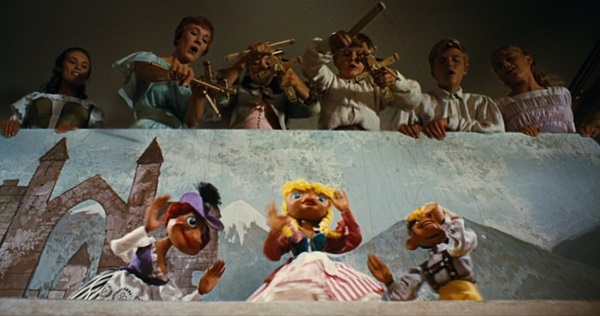 “The Lonely Goatherd” is the first song Maria and the children sing specifically for Georg von Trapp. It’s part of an elaborate puppet show they put on, and boy is it a wonder to behold. This song tells the story of a young man and a young goat in the Austrian countryside who find love with a young girl and a female goat, respectively. There’s nothing terribly subtle about it, but that doesn’t change the fact that it’s a jaunty tune paired with amazing visuals.
Isn’t it interesting that Maria would choose this as the first song to sing to Georg? She doesn’t even realize that she’s in love with him yet, but she is subconsciously telling him that she wants them both to overcome their loneliness with each other.
Edelweiss – Father’s Love for His Children
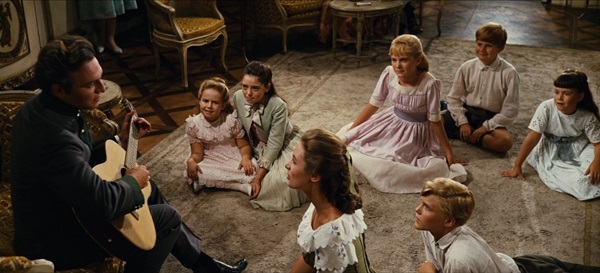 Edelweiss is a mountain flower that grows in high altitudes, such as the mountains and hills of Austria that Maria loves so much. When Georg von Trapp is pressed by his children to sing them a song, he sings about this beautiful flower that symbolizes his home country that he loves. But he connects it to his children by expressing joy at seeing it “small and white, clean and bright,” and noting that it looks happy to meet and greet him. He also declares his wish to see it bloom and grow forever.
At the end of the film, when he is forced to sing at a music festival, he becomes emotional as he sings this song, so Maria and his children help him finish it. And they invite the entire crowd of fellow Austrians to sing a song of hope and love for the future of their country, which is their children.
So Long, Farewell – Love of Country
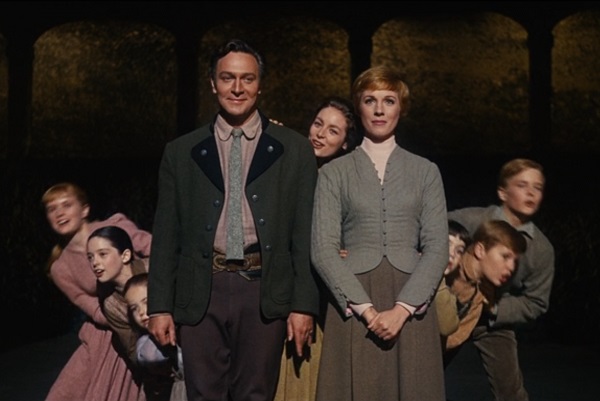 “So Long, Farewell” begins as a fun little tune sung by the von Trapp children to a bunch of grownups at their father’s party. But it takes on a much more poignant meaning at the end of the film when Maria and Georg von Trapp join their children in singing it at a music festival. They are singing it to their entire country that they are being forced to flee because of the Nazis. They don’t want to go, but they must. And they hope it won’t be the last time they get to see their beloved homeland and countrymen.
All through the film, Georg expresses contempt at the idea of his children singing outside his home. When he has to allow them to sing in a music festival, this is the song they end with. I think that the reason why he hates the thought of his children singing outside his home is because music represents love, and he doesn’t want his children’s love to be treated carelessly. Happily, the crowd responds well to his children’s beautiful voices, and he’s able to share both his love for his country and his love for his children in a public setting without spoiling the specialness of that love.
Climb Ev’ry Mountain – Seeking Love
When Maria realizes she’s falling in love with Georg von Trapp, she runs back to the abbey, abandoning her role as governess. She’s afraid that she’s being unfaithful to God because a Nun shouldn’t fall in love. However, her Reverend Mother shares words of wisdom with her and encourages her to go wherever God wants her to go by singing the song “Climb Ev’ry Mountain.”
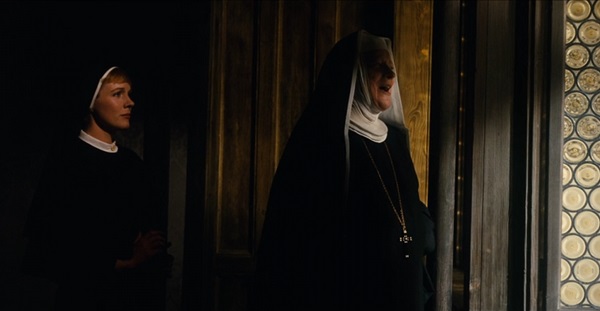 I like that the Reverend Mother connects Maria’s search for happiness with her love for the hills and countryside of Austria. In “The Sound of Music,” Maria expressed longing for love. Now she hears that it’s not a sin to seek her own happiness, especially when it will make everyone around her so happy, too. “Climb Ev’ry Mountain” is a reminder that joy takes effort, and it’s often found in unexpected places. Maria just has to get out of her comfort zone to find it.
Something Good – Finding Love at Last
 When Maria and Georg von Trapp finally admit their feelings for each other, they can’t contain how happy they are. Thus, they sing “Something Good.” That song is all about having a hard time believing that something so good as finding romantic love could happen to you. Love seems like something only someone else could experience – someone better than me. But that’s just not the case. Maria and Georg may not be perfect, but they’re worthy of each other’s love.
There’s something magical about giving your love to someone else and having them do the same thing to you. We’re all well-acquainted with our own personal flaws and failings, since we live with them every day. But to find someone who’s willing to see past our flaws and find our good qualities is a precious gift. It’s one worth celebrating and capturing in a wonderful song like this. I especially enjoy it when they describe the silly moments that made them begin to fall in love with each other.
The Feeling of Love Is Like the Sound of Music
This article is one of those ones that feels like it writes itself. I wrote this in my head long before I sat down at a keyboard and gave it form. It’s always fascinating when that happens. My fingers felt like they were getting in the way of what I was trying to say because they would miss words or type the wrong words in their haste to put ideas down on paper. Thank goodness for the power of editing.
I hope I did this topic justice. It’s always difficult for me when I feel like I’m revealing something personal about myself in my Deja Reviewer articles. This is just something too beautiful to keep hidden, though. Hopefully this will increase your love of The Sound of Music and inspire you to revisit that classic film. Finding new ways to appreciate old films is one of my favorite things.
This is the Deja Reviewer bidding you so long, farewell until we meet again.
All images are the copyright of their owner.

Want to Support the Deja Reviewer?
If you’d like to support the Deja Reviewer, please consider donating a few dollars to keep this site going strong. I’ll even send you an original joke if you do! Try it, and prepare to enjoy a good chuckle.
$5.00


 Deja Reviewer
Pingback: Why I Love The Sound of Music Even More Than Bluey | Deja Reviewer