An actor’s third outing of James Bond is often remembered as his greatest performance and the best film of his tenure. Sean Connery’s Goldfinger built upon the first two films to perfect the template that future films would follow. Roger Moore’s The Spy Who Loved Me revitalized the formula and was that actor’s favorite film to make. Daniel Craig’s Skyfall added new depth to the character that had been missing before that.
What about Pierce Brosnan’s The World Is Not Enough? That’s remembered for being the last film of Q actor Desmond Llewelyn’s long tenure (stretching from 1963’s From Russia with Love) and the great Bond line, “I never miss.” But I would argue that Brosnan’s third turn as James Bond was more significant than his two previous films for one simple reason.
It hurt 007.
James Bond’s Longstanding Untouchability
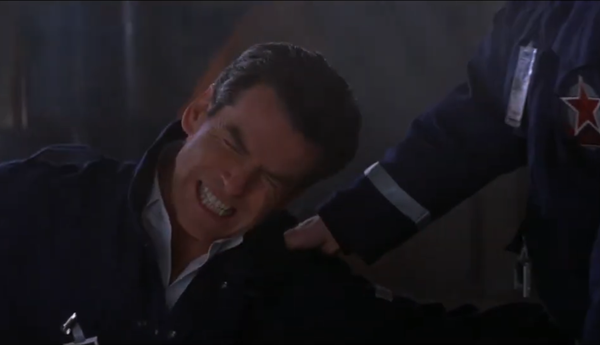 During the incredibly long opening sequence of The World Is Not Enough, Bond falls off an exploding hot-air balloon and hurts his left shoulder. And this becomes a recurring issue where Bond deals with shoulder pain throughout the rest of the film. The bad guy, who can’t feel pain, uses Bond’s weakness against him at their first meeting.
Of course, Bond had been hurt many times before. Dr. No’s henchmen beat him and threw him in a jail cell toward the end of the first film in the series. But he suffered no major consequences from that beating. He got buried in an avalanche in On Her Majesty’s Secret Service, and he didn’t have a scratch in the next scene. He got cut on his shoulder during a train fight with Jaws in The Spy Who Loved Me, but that was just an excuse for his love interest to romantically take his shirt off. They never mentioned that injury again. In Octopussy, it looked like he was stabbed and broke several bones during two separate chase scenes, but he actually emerged unscathed from both of them. And he even made a joke about the pain he seemed to be suffering in the final scene of Goldeneye, telling his love interest that he’s fine when she worries about his condition after a brutal fight with 006.
Bond’s Descent Into Pain
If you’ll notice, none of those times when Bond was hurt had any lasting consequences. Up until The World Is Not Enough, it was part of the conceit of the series that he would always be able to emerge miraculously unhurt from life-threatening situations. But this film changed that. Suddenly, Bond went from never getting hurt to always being in real danger of physical pain and torture.
The very next movie, Die Another Day, portrayed Bond being captured and tortured during the opening scene and credits. Instead of escaping quickly like he did in just about every other film, he spent 14 months incarcerated. You could argue that he didn’t have any major physical or psychological scars from this experience, but it was still shocking to see Bond in such a vulnerable position for an extended amount of time.
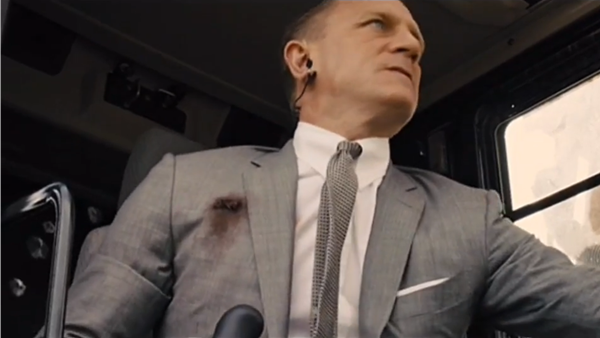 Casino Royale famously shows Bond get tortured and have to go to the hospital afterwards. Quantum of Solace portrays Bond as deeply wounded in his psyche by Vesper’s betrayal in the previous film. Skyfall has him get shot for the first time in the opening scene by both a bad guy and Moneypenny. Spectre gives Bond permanent brain damage during a clinical torture session. And No Time to Die straight up kills Bond in the finale.
The small chink in James Bond’s armor in The World Is Not Enough grew into a gaping wound there was no recovering from in just 22 years.
Films vs. Novels
Anyone who has read Ian Fleming’s novels will probably be happy to call me out and say that Bond getting hurt is nothing new. In Casino Royale, he gets badly bruised from an explosion and has to be massaged to deaden the pain. Then he is brutally tortured during the climax, which requires a long recovery time. The bad guy in Live and Let Die bends Bond’s finger all the way back the wrong way, making him pass out from the pain. Once he escapes, he gets a specialist to put it back in place. At the end of From Russia with Love, Bond gets kicked by Spectre agent Rosa Klebb’s poisoned shoe blade and passes out. It’s left ambiguous whether or not he died until the next novel begins. In The Man with the Golden Gun, Bond suffers a head wound, gets amnesia, and is brainwashed for part of the story to try to kill M.
The books are quite different than the films. From Russia with Love is the closest the films came to capturing a Fleming novel in cinematic form. It deals with subtle espionage more than impressive action set pieces. It mostly saves the latter for the climax. The rest of the films after that one supercharge the spectacle to great results. And they make Bond into more of an untouchable, suave killing machine than the first two films in the series. From 1964 to 1997, Bond was larger than life. Villains could slow him down, tie him up, point a gun at him, and threaten him with death, but he’d always be able to think his way out of any death trap.
Everything or Nothing
By opening the door to Bond’s mortality, The World Is Not Enough unwittingly led to the character’s demise. Bond wasn’t untouchable anymore. He could be hurt. As a wise man once said, “If it bleeds, we can kill it.” I suppose killing Bond was just the logical end of the trajectory the franchise had been on since Pierce Brosnan’s pivotal third film.
It’s also appropriate that EON Productions (the company responsible for the official Bond films) would go out like that. EON stands for “Everything or Nothing,” a philosophical statement about how the original founders lived life. If James Bond can’t be unkillable, then he has to be entirely killable. Not much wiggle room with a philosophy like that.
This is the Deja Reviewer bidding you farewell until we meet again.
All images are the copyright of their owner.
Want to Support the Deja Reviewer? If you’d like to support the Deja Reviewer, please consider donating a few dollars to keep this site going strong. I’ll even send you an original joke if you do! Try it, and prepare to enjoy a good chuckle. $5.00


 Deja Reviewer