
Dune is one of my favorite books. I’ve only read it once, but it stands out in my mind as one of the most immersive literary experiences I’ve ever had. And I’ve admired the many attempts to make it into a film. The first attempt spectacularly collapsed during pre-production, but its supernova created the genesis for Alien and other sci-fi classics.
There have been three other adaptations that successfully made it to the finish line. I recently watched Dune: Part Two, and I couldn’t help comparing it to the previous two versions of that story. And it begs the question, which one is the best? Let’s explore that question as we examine the 1984, 2000, and 2021-2024 versions of Dune.
Faithfulness to the Book
Each Dune adaptation hits the same beats:
- Paul Atreides survives the Gom Jabbar test at the start.
- The journey of House Atreides to Arrakis to take over Spice production from the Harkonnens.
- The attempt on Paul’s life with a hunter-seeker.
- The first time Paul wears a stillsuit, and the evacuation of a spice harvester.
- Kynes is introduced as an imperial agent.
- The fall of House Atreides because of the traitor Dr. Yueh.
- The death of Duncan Idaho by the Emperor’s Sardukar.
- The death of Duke Leto Atreides with a poison tooth.
- Paul and Jessica’s escape and rescue by Stilgar’s sietch.
- Paul’s romance with Chani and rise to power among the Fremen.
- Paul rides a giant sandworm for the first time.
- Paul takes the Water of Life to become the Kwisatz Haderach.
- The sabotage of Harkonnen Spice mining, which forces a showdown with Emperor Shaddam IV.
- The death of the Baron Vladimir Harkonnen, and Paul’s final fight with Feyd-Rautha Harkonnen.
- Paul’s ascension to the throne as the new Emperor.
 Despite these similarities between all three adaptations, there are a lot of details that are highlighted, downplayed, and even ignored by each one. For example, the little mouse-like creature called Muad’Dib is absent from the 1984 film. That film names him after the mouse shadow on the second moon of Arrakis, which is still accurate enough to the book.
Chani is a much more supportive character of Paul in the 1984 and 2000 versions compared to the 2021-2024 version. She certainly worries about him and does her best to ward off potential threats, especially in the 2000 version. But she doesn’t call him out or try to stop his march to victory like she does in Dune: Part Two. That takes a more modern approach to an old story, making Chani resentful of her status at the end rather than finding a silver lining.
 Princess Irulan is barely in the 1984 and 2021-2024 versions of Dune. She’s an important player in the 2000 miniseries where she uncovers the mystery of House Atreides’ downfall. The 2000 miniseries is the only version that contains a pivotal dinner scene where Paul and Princess Irulan meet on Arrakis. This scene mirrors the ending where she accepts her fate as Paul’s wife to end the feud between Paul and her father.
 The 2000 miniseries and Dune: Part Two give the second half of the story a chance to breathe much more than the 1984 film. All three versions introduce Paul’s younger sister Alia, though only the 2000 miniseries shows her isolation from the Fremen because of her special powers. The 2024 version leaves her unborn until the end of the story, necessitating Paul to kill the Baron rather than her. That major change might lead to interesting implications for Children of Dune if that gets made.
Dune: Part Two does a good job explaining why Paul is hesitant to go south and take the Water of Life. He doesn’t want to start a holy war with the other Great Houses. But he sees no other way to obtain the end he foresees. That point isn’t addressed by the 1984 or 2000 versions. It’s interesting that the reason Paul goes south and takes the Water of Life is different here from the reason he does so in the book and in the 2000 miniseries. In Dune: Part Two, he’s spurred to action because Feyd takes over from Rabban and attacks Stilgar’s sietch, making it personal to Paul. But it was originally written in the book that Paul reacted to Gurney attempting to assassinate Paul’s mother, believing she’d betrayed Duke Leto. Paul is scared by the fact that he didn’t see that coming, so he feels like his only option is to take the Water of Life in order to see more of the future.
 Only the 2000 miniseries clearly explains that Dr. Kynes is Liet, the father of Chani, and the steward of Arrakis awaiting the coming of the Mahdi. Chani mourns his death after he dies in the desert, just like in the book. The 2021 film changes Dr. Kynes to a woman and never reveals Dr. Kynes’ relation to Chani.
The 2000 miniseries is the only version that introduces Paul’s son Leto, who is killed in his infancy by the Emperor’s Sardaukar. That raises the stakes of Paul’s final confrontation with the Emperor and makes their quarrel more personal. In Dune: Part Two, it’s revealed that the Emperor loved Paul’s father Duke Leto like a son, which is accurate to the book. But it does not explore the irony of the Emperor killing the man he loves like a son as well as the grandson named after that man since the grandson doesn’t appear in that film.
 Dune (2021) gives us the greatest glimpse into the world that Paul leaves to come to Arrakis. I like how much time it spends on the lush, green Caladan, which contrasts with the dry, desert environment for the rest of the film. That is absent from the 2000 miniseries, and it’s quickly glossed over in the 1984 film.
Interpretation
The 1984 film takes the prophecies about the Mahdi as Gospel. It treats them reverently and shows how Paul Atreides fulfills each prophecy to the letter. The big reveal of the story comes when Paul takes the Water of Life and realizes that the Spice comes from the sandworm. His relationship with the Baron is never explored.
The 2000 miniseries treats the Mahdi prophecies partly as Bene Gesserit concoctions and partly as divinely inspired predictions that didn’t go far enough in describing all that Muad’Dib would achieve. The fact that the Spice comes from the sandworm is common knowledge among the Fremen. What Paul learns when he takes the Water of Life is that his mother is the daughter of the Baron.
 The 2021-2024 version treats the Mahdi prophecies purely as Bene Gesserit concoctions, and it leaves it open to interpretation whether or not Paul Atreides actually fulfilled them. It cleverly positions Feyd as a rival to Paul who could potentially take his place if Paul fails. The fact that the Spice comes from the sandworm is not mentioned, and Paul’s relationship to the Baron is treated as a big secret that is revealed near the end.
All three interpretations are intriguing additions to the legend of Dune. I like how each one builds a credible case for the way its story unfolds. If the prophecies are true, then opposing Paul’s ascension is like opposing the will of God. Opposition simply makes him stronger. That’s clearly shown in the 1984 film and 2000 miniseries, where Paul seems almost predestined to succeed.
The 2021-2024 version takes a different angle on the story. Lady Jessica works hard to manipulate the Fremen into believing her son fits their prophecies about the Mahdi. That’s in spite of the fact that she herself may harbor some doubts and is mostly interested in seeing her son survive in a harsh environment.
Each of these interpretations can be read into the book, so I like that they’ve all found an expression in these adaptations. I tend to agree with the first two adaptations’ portrayal more than the 2021-2024 one.
Music
Each version of Dune has solid music that emphasizes different aspects of the story that’s being told. The 1984 film has ominous, heavy music portending the inevitable fulfillment of prophecy. The 2000 miniseries has somber music befitting a tragedy of epic proportions, despite the eventual triumph of Paul. And the newest version has eerie music that does a good job of combining the music of the two previous versions into a lamentation and cry for justice.
Visual Effects
 Of course, the newest version has the best special effects because of its access to modern technology and a greater budget. There’s a quaintness to the 1984 film and an understated beauty to the 2000 miniseries.
Ending
 The ending of each version is quite telling. The 1984 film portrays Paul as suddenly able to control the weather on Arrakis and make it rain for the first time ever. This falls in line with the prophecy about him being able to change the face of Arrakis despite its deleterious effect on the sandworms. It’s a grand moment of beauty that fits with the tone of the film, even though it is not found in the book.
The 2000 miniseries ends with a voiceover that uses almost the exact wording from the book. Chani accepts that Paul must marry Princess Irulan to become the new Emperor, but she knows it’s a political union and nothing more. She points out that she, just like Lady Jessica, will be known as the true wife of her great husband, despite technically being a concubine. Those words are spoken by Jessica in the book, but it’s nice to hear them come from the mouth of Chani in this adaptation.
 The 2021-2024 films end in a much more somber way. The Great Houses fail to acknowledge Paul as the new Emperor, requiring the start of a Holy War. I’m not sure how they hope to win when Paul holds all the cards, and he could simply shut off their ability to use Spice for space travel. That would end their rebellion awfully fast. Whatever the case, Paul also marries Princess Irulan. Unlike the 2000 adaptation and the book, Chani takes this news very poorly. She runs away and stubbornly cries like this wasn’t something she had anticipated happening. There’s a quiet dignity to Chani in the other two versions that is sadly absent from this portrayal.
Final Verdict
Dune (1984) is a classic in my eyes. There’s a lot to enjoy about it, but I wouldn’t put it as the best adaptation of the book since it leaves out so much. Even the unauthorized expanded version of the film barely scratches the surface of the rich story that could be mined.
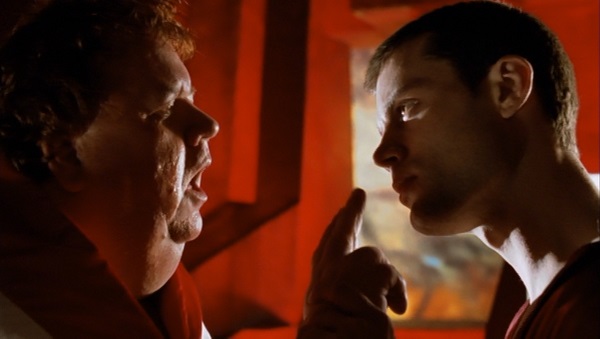 Dune (2000) is a miniseries produced by the Sci-Fi (now Syfy) Channel. It’s split into three parts, and it does a much better job covering the full breadth of the book. It includes little elements like the garden on Arrakis, the subtle scheming of the Harkonnens, the discovery of Duke Leto’s remains, and the many attempts on Paul’s life, while maintaining the big picture of the story quite well. It’s a satisfying tale of revenge.
 Dune (2021) and Dune: Part Two (2024) smartly split the story in half to show Paul’s fall and rise. I love how effortless the special effects appear. The aircraft and other machines look like they could actually be real. And the acting is top-notch. Despite taking the time to show a lot of key details missing from the 1984 film, this two-part adaptation fails to follow the book as faithfully as the 2000 miniseries.
 It also doesn’t deliver as strong a revenge plot as it seems like it should. The story gets muddled at the end. There’s just not enough time that passes to allow everything to happen naturally. All of the events take place in fewer than nine months rather than more than six years. Without the death of Paul’s son, there’s a gaping hole at the end of this film that fails to be filled by the murder of the three main Harkonnen villains.
The newest version is so close to being great. I want to love it, but I still have to go with the 2000 miniseries as the best adaptation so far. It strikes the right balance between the two extremes of the 1984 and 2021-2024 film versions, and it takes its time in a way that perhaps only a TV miniseries has the luxury of doing. At 295 minutes (for the Special Edition), it’s far longer than the 137 minutes of the 1984 film, though it’s shorter than the combined 321 minutes of the 2021-2024 films. Yet it manages to tell a much more complete story in that time. Despite its obvious shortcomings, it manages to be my favorite.
Like I said at the start, I’m glad that all of these adaptations exist because they showcase the incredible depth of the book they spring from. This is a story that can be seen in a variety of ways. Being able to watch multiple versions of the same story feels like we’re seeing through the eyes of the Kwisatz Haderach who can see many possibilities at the same time. I think that’s a brilliant achievement.
This is the Deja Reviewer bidding you farewell until we meet again.
All images are the copyright of their respective owners.
Want to Support the Deja Reviewer? If you’d like to support the Deja Reviewer, please consider donating a few dollars to keep this site going strong. I’ll even send you an original joke if you do! Try it, and prepare to enjoy a good chuckle. $5.00


 Deja Reviewer