Some people like to examine the endings of 2001: A Space Odyssey, Inception, and The Usual Suspects as masterclasses in complexity. Those film endings are endlessly minable for depth, and they’re quite challenging to decipher. There’s one film I’ve never heard included in the same breath as those others, although its own ending rivals the complexity of anything a science fiction or crime drama film has to offer: 1951’s An American in Paris.
Elevated by the Final Ballet Sequence
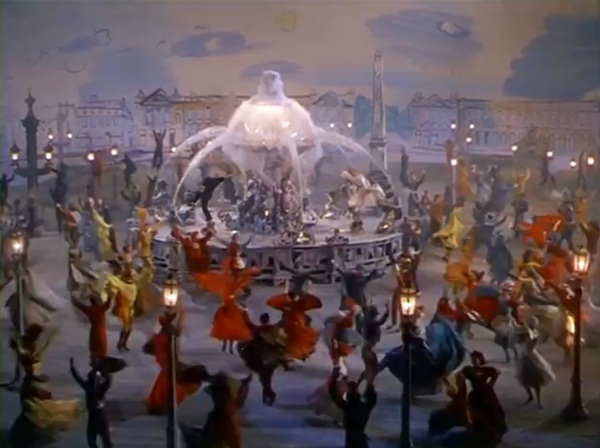 An American in Paris is in a class by itself. It appears, at first glance, to be nothing more than a silly musical, but there’s a depth to it that is truly astonishing. Up until the last 20 minutes of the film, you think that it’s a simple romance. Boy meets girl, girl falls in love with boy, boy loses girl because she feels obligated to marry another, boy sinks into depression. Right when it looks like all hope is lost, the biggest, most elaborate ballet ever put to screen bursts onto the scene.
I’m not kidding when I say that the dance number at the end of An American in Paris has never been topped. It’s without precedent or rival. You can watch it at this link to YouTube.
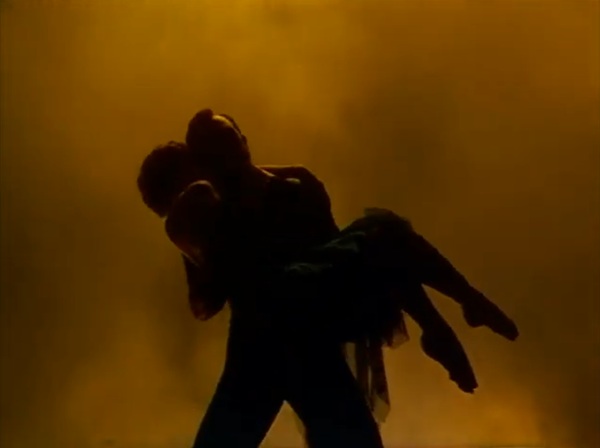 Gene Kelly carries this movie as easily as he carries costar Leslie Caron during their dances together. This final scene that takes place inside his character’s mind is something almost entirely dreamed up by Kelly himself. He won a special honorary Academy Award in 1952 for his spectacular dance choreography.
I’m convinced that the last 20 minutes of An American in Paris are the reason why it won Best Picture at the Oscars over A Streetcar Named Desire and other high-profile films. The choreography is nothing short of stunning, and it manages to tell a huge story without words. Not a single line of dialogue is uttered after the lovers are parted. Music, movement, and movie magic all combine to convey more emotions than could possibly be captured in the spoken word.
My Attempt to Explain the Ballet
To understand this epic ballet, you need to have seen everything preceding it. In fact, the entire movie feels like one big buildup to this ballet. Even though I’ve seen the film multiple times, I don’t think I fully understand everything about the ending. It’s so rich and beautiful, I find myself getting lost in the details.
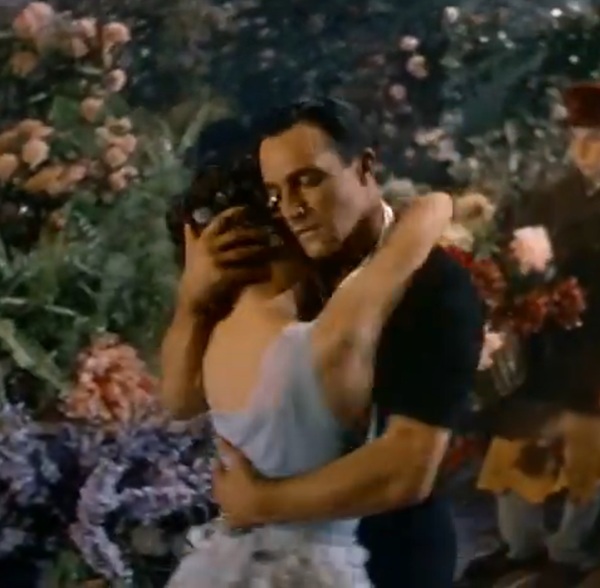
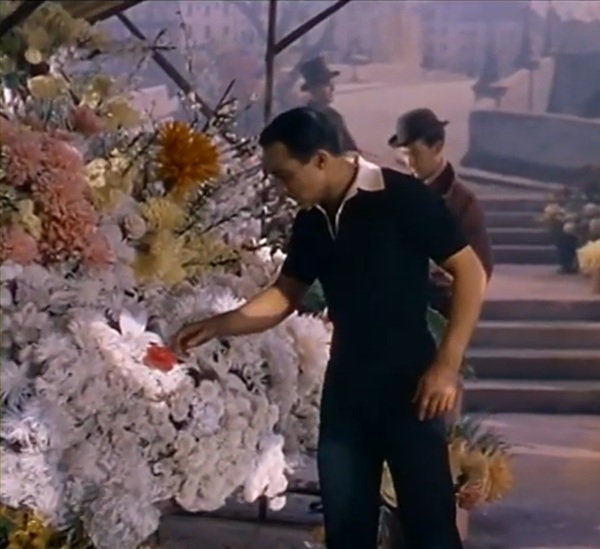 That is why I say it’s comparable to other great endings of films that are endlessly debated. An American in Paris deserves to be examined and comprehended. The ballet starts out with the character feeling lonely and solemn. Then it seems to retell the main character’s origin in Paris. He joins the Armed Forces in World War II and liberates France. He falls in love with Paris, the city of love, and becomes entranced by the beauty all around him. Flowers play a special role in the ballet sequence. He is surrounded by flowers, which likely represent his possibilities for love, but he’s only interested in one red rose. And that flower is already spoken for. He has no right to seek it, and yet it’s all he can think about.
The beauty of Paris fades and the luster of the lights dims without the love of his life. It’s funny how life can lose its color when we’re denied the one thing that gives it meaning. I believe he imagines what his life could have been like if he had been able to marry the girl he loves. They travel to far-off places and explore new vistas together. But it all comes crashing down in the end because it’s just his imagination at work. His heart is crushed and empty without her. They love each other, but duty and honor call them to wildly different paths.
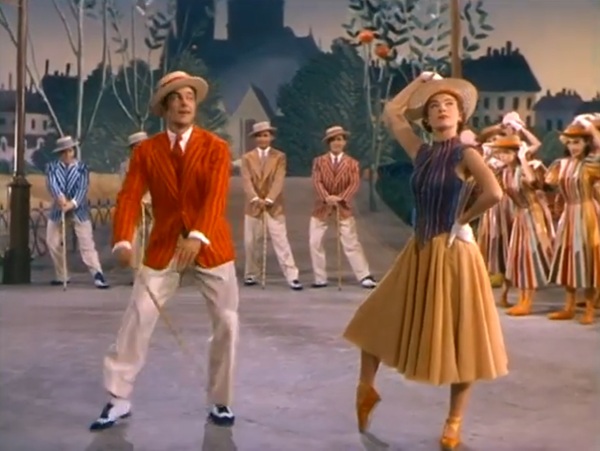 What can a poor, struggling artist offer a girl who has it all? That seems to be at the core of the final ballet. Where does the main character fit into a bustling, noisy world full of larger-than-life sets? His dancing, while impressive, is just one of many incredible dances happening all over the stage. Why should the girl he loves pay him any mind?
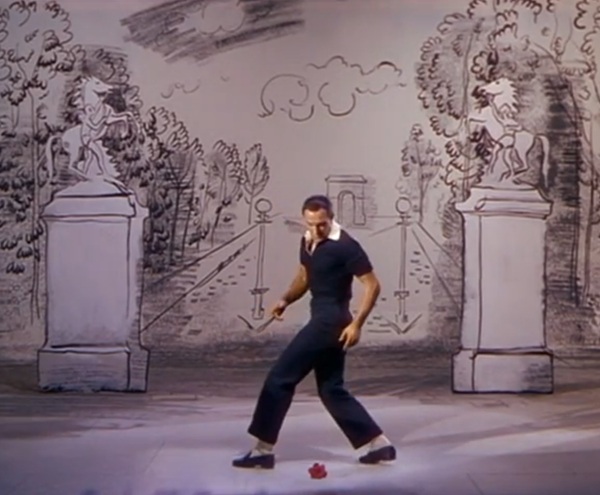 These questions are left unresolved at the end of the ballet. He is alone, the same way he started. It’s pretty shocking the way that he’s left alone. His love and everyone around him instantly vanishes in the middle of a grand dance. The sketches he’s drawn of Paris come to life throughout the sequence in vibrant colors. But at the end, he returns to his black-and-white drawings lacking ornament. And the only thing that stands out is the red rose that represents the girl he loves.
An Incomparable Masterpiece
I’m barely scratching the surface of everything in this ballet. It’s a wonder to behold. If you haven’t seen An American in Paris, you’re in for a treat. It’s an incomparable masterpiece. The first hour and a half is packed with witty dialogue, memorable performances, and fantastic music by the legendary George Gershwin. And it leads perfectly into something so rich with meaning and passion that it’s almost indescribable. I can’t do it justice with my clumsy words.
The ballet is complicated, yet it appears effortless. You can tell that the dancers are working hard, but they also look like they’re gliding. The colors and lights keep changing and highlighting key moments. What do they mean? Maybe that’s up to one’s interpretation. I don’t know what it all means, and instead of frustrating me, it dazzles me. I’m left wanting more in the best way. There is no letdown by ambiguity.
The Freedom of Incomprehensible Beauty
Have you seen An American in Paris? What do you think about the ending? I’d love to understand it better. Perhaps I should be content to let it remain a glorious mystery. After all, as Red said in The Shawshank Redemption when he heard a beautiful Mozart piece brought to life over loudspeakers at a prison:
 “I have no idea to this day what those two Italian ladies were singing about. Truth is, I don’t want to know. Some things are better left unsaid. I’d like to think they were singing about something so beautiful it can’t be expressed in words, and it makes your heart ache because of it. I tell you, those voices soared higher and farther than anybody in a gray place dares to dream. It was as if some beautiful bird had flapped into our drab little cage and made these walls dissolve away. And for the briefest of moments, every last man in Shawshank felt free.”
Even if it’s just a single red rose, let An American in Paris add some color to your life. It’s the kind of movie that leaves you smiling and loving life. As the movie itself posits, “Who could ask for anything more?”
This is the Deja Reviewer bidding you farewell until we meet again.
All images are the copyright of their owner.
Want to Support the Deja Reviewer? If you’d like to support the Deja Reviewer, please consider donating a few dollars to keep this site going strong. I’ll even send you an original joke if you do! Try it, and prepare to enjoy a good chuckle. $5.00


 Deja Reviewer
Pingback: This Simple Scene in Seven Brides for Seven Brothers Is Stunning | Deja Reviewer