1990’s The Neverending Story II: The Next Chapter is not held in the same esteem as its predecessor. It’s often regarded as an inferior sequel to The Neverending Story. However, it has a most intriguing idea at its core that can help us make sense of something happening in our modern world. And that makes it worth checking out.
Bastian’s Wishes
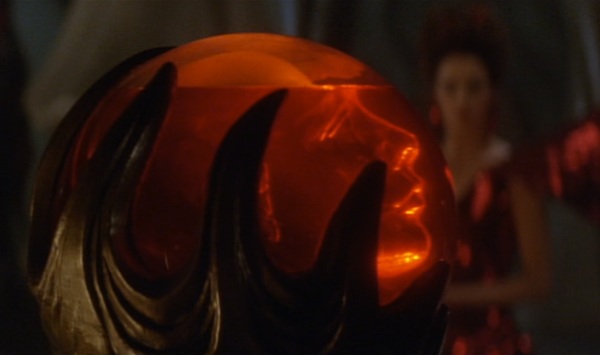 At the start of the film, when a boy named Bastian Balthazar Bux enters Fantasia, the villainous Xayide spells out for the audience what her evil plan is. She wants to drain Bastian’s mind of memories with every wish he makes. That’s an interesting twist on the ending of the first film. Bastian was told by the Childlike Empress that every wish he made would make Fantasia more beautiful because that wondrous land would live within his hopes and dreams.
The sequel turns that idea upside down. Now he loses something precious every time he makes a wish. Keep that in mind.
A talking bird named Nimbly flies to Bastian and immediately tells him to start making wishes. Nimbly is working for Xayide, so he has every reason to get Bastian to obey her wishes.
Bastian initially resists the offer. He wisely considers the possibility that things are the way they are for a good reason, and he shouldn’t just change them on a whim. Even when he’s put into a dangerous situation, he saves himself by his own efforts and through practical support from Nimbly.
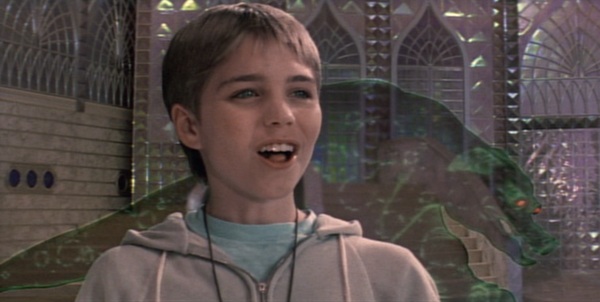 In spite of this, he’s soon prevailed upon to start making wishes. It’s mostly by accident at first. He unthinkingly wishes for a dragon that proves to be an out-of-control monster. It’s too bad he did that because he already had access to a Luck Dragon named Falkor. He must have forgotten. That is easy to do when he’s making wishes that lead him to forget important things.
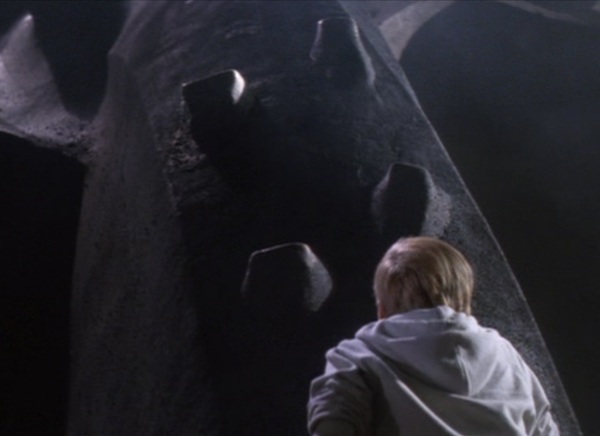
When he wants to get into Xayide’s castle, he wishes for another way besides the front gate. And he’s obliged by a set of steps that scale the castle wall. Unfortunately, the magic doesn’t finish the job and only goes partway up. So he has to wish for more steps. Instead of wishing for all of the extra steps at once, he adds them one at a time. That wastes a lot of wishes.
At the end of the film, Bastian is down to his last two wishes. He makes one wish to heal his mortally wounded friend Atreyu at the cost of his last memory of his mother. And then he uses his final wish to defeat Xayide by wishing for her to have a heart. All the feelings that suddenly come to her, and the horror over her wicked designs, destroy her in a big explosion. The day is saved, and Bastian gets all his memories back.
What Does All This Mean?
What if you could wish for something and it would magically appear? That was the realm of pure fantasy in 1990. But now it’s all around us.
I will liken Bastian’s wishing ability to artificial intelligence and myself to Bastian. I was recently tasked with creating a bunch of images for blog posts. But I’m a terrible artist, so I used AI to generate those images. For the first few ones, I had a clever idea in my mind I wanted to convey, and I used the AI to create an image that reflected that idea.
However, I started to get lazy as the number of images piled up. I needed so many of them that I started asking the AI to interpret some concepts and come up with a visualization of them. That proved to be disastrous. The AI failed to understand anything beyond the obvious, and it developed many images that were unusable. So I had to go in and ask for multiple iterations before finding something satisfying.
 Little did I know that I was wasting tokens as I did that. One by one, they were draining away like sand in an hourglass until I came to a fateful moment where I was told I was out of tokens. And out of luck. I had wished for them one step at a time, like Bastian, and ended up in a pickle of my own shortsightedness.
That moment humbled me. It forced me to be smarter about how I use AI. It’s not a replacement for thinking and personal judgment. It’s a tool that helps me accomplish more than I could do alone.
We all need to be careful with our use of AI. When used correctly, it can amplify our efforts and help us create wonderful things. In other words, it can be like the Childlike Empress’s promise to Bastian that each wish he makes will make Fantasia even greater.
On the flipside, if we allow AI to think for us and do all of our work without us lifting a finger and offering our own ideas into the mix, it will slowly drain us like Xayide wanted. Our imagination will dwindle, and our ability to make and hold memories will stagnate.
The Emptiness
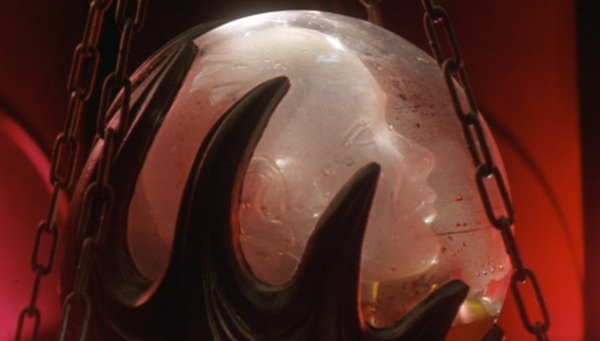 The villains in The Neverending Story and its sequel are in service of entities referred to as the Nothing and the Emptiness, respectively. They are what happens when we stop thinking. We leave a void that is filled by those who wish to control us. Instead of allowing AI to destroy our ability to create new things, I hope we will put it to good use and continue to be as creative as we’ve ever been.
I’m no artist. When I try to put pen to paper and draw something I can picture in my head, I feel the awkwardness of my hands. Thankfully, AI helps me with this deficiency. But I still have to come up with the idea I’m trying to visualize. No matter how smart AI gets, it can’t replace that human spark.
That’s one example of how I can use AI in a positive manner. I don’t want to come across as saying that it’s all bad or anything like that. It’s a tool, and we decide if we will use it constructively or destructively.
You can see both examples in The Neverending Story II: The Next Chapter. If you’d like to revisit this cautionary tale about the strange new world we’re living in, I wish you well.
This is the Deja Reviewer bidding you farewell until we meet again.
All images are the copyright of their owner.
Want to Support the Deja Reviewer? If you’d like to support the Deja Reviewer, please consider donating a few dollars to keep this site going strong. I’ll even send you an original joke if you do! Try it, and prepare to enjoy a good chuckle. $5.00


 Deja Reviewer