Frank Herbert’s Dune is one of my favorite books. And David Lynch’s Dune (1984) is a guilty pleasure of mine. For a long time, I’ve been fascinated by its failure. What is it about that interpretation of Dune that doesn’t work? I finally figured it out, and I’d like to share it with you because it points to a critical element of every film.
A Series of Goals
Movie plots are generally made up of a series of goals. Character A wants to do something or get somewhere, which is in direct conflict with character B’s desires, so the two clash until one triumphs over the other or they learn to get along. That tends to be the way that things go. In order for a character’s achievement to resonate in a story, we need to understand two things:
- The importance of doing a thing.
- How hard it is to do that thing.
It also helps if we care about the character trying to achieve something and the worthiness of their goal. In Dune, we get it pounded into our minds the importance of the Spice Melange. The spice must flow, we are told many times. So we understand the importance of maintaining spice production on Arrakis.
Thus, Paul Atreides’ actions to halt spice production should be powerful. However, this part of the movie falls flat because we’ve never seen Paul fail at anything. What Dune is missing is failure, and that ironically led to its own failure.
The Necessity of Showing Failure
 Imagine in Star Wars if Luke Skywalker had started the Battle of Yavin by flying his X-wing down the Death Star trench, avoiding all laser blasts, and depositing his torpedoes into the exhaust port with perfect precision. We didn’t see anyone else make a try at it and fail, R2D2 never got shot, and Han Solo was unnecessary. That would have been really boring. Yet that is basically the story arc of Paul Atreides in the 1984 Dune film.
 He never makes a mistake, and we never get a sense of how difficult anything is that he accomplishes. He needs to ride a giant worm in the desert? He does it on his first try. He needs to take the Water of Life? He manages to do it without dying, even though we’re told many have tried to do it before and died. He needs to break through a powerful barrier to get to the emperor? He uses atomics and worms, and nothing goes wrong at all.
There are many other examples. I’m sure all of these things required great skill and effort on Paul’s part. Unfortunately, we can’t understand the scale of these accomplishments because each one lacks the essential ingredient of failure.
Seeing someone fail to accomplish a goal helps us understand its importance and how hard it is to do. It doesn’t necessarily have to be the main character who fails, especially if the consequence is death. But witnessing the consequences of a failure helps the audience take it seriously when we see a more central character make the attempt.
Good Examples of Failure
 When Scarecrow meets with a single mob boss at the start of The Dark Knight, he’s backed up by many armed henchmen. And he ends up getting captured by Batman at the end of it. But when the Joker enters the meeting place of every mob boss in Gotham City, he doesn’t have a single gun or henchman to back him up. And yet he’s able to walk away scot-free at the end of his encounter. This demonstrates how dangerous of a villain the Joker is.
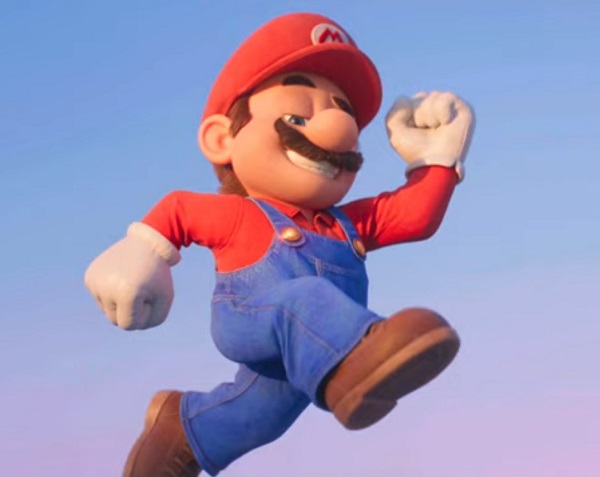 Of course, we don’t have to see failure first for this strategy to work. We can also see the ideal at the start and then watch the hero fail to live up to it, like when Morpheus encourages Neo to free his mind and then performs an impossible jump between skyscrapers in The Matrix. Or in The Super Mario Bros. Movie, when Princess Peach flawlessly completes a level after she meets Mario, and then Mario struggles to get through it. Each of these scenes shows that the hero has a major challenge to overcome. And this makes it all the more satisfying when he finally does.
Gauging Success
The point is, we need a gauge or contrast to use in just about every scene in a movie. Since storytelling is mainly about goals, it’s a good idea to demonstrate what will happen if those goals aren’t attained and also provide context for what prevents most people from achieving them. Then we, the audience, will be invested in seeing the hero succeed, and we’ll be able to share in the elation of their success.
Without these elements, a Duke’s son becoming the Kwisatz Haderach sounds like gibberish rather than one of the most profound victories in all of sci-fi literature.
This is the Deja Reviewer bidding you farewell until we meet again.
All images are the copyright of their respective owners.
Want to Support the Deja Reviewer? If you’d like to support the Deja Reviewer, please consider donating a few dollars to keep this site going strong. I’ll even send you an original joke if you do! Try it, and prepare to enjoy a good chuckle. $5.00


 Deja Reviewer
Paul’s inability to fail is actually one of his most unique characteristics. He has the gift/curse of prescience which allows him to see into the future. This ability gives him the false appearance of god-like powers despite the fact that he’s just a man. A well-trained, very skilled man, to be sure, but an imperfect man nonetheless. He knows he’s a fraud but feels trapped by his “destiny” and the misguided faith that the Fremen have in him. Consequently, he’s not really a hero at all. His inability to faith is boring to the casual observer, but confusing and frustrating to himself. the only way he can fail at anything is if he chooses to do so.
This is a fascinating concept and I think it is Frank Herbert’s greatest contribution to the sci-fi genre. It’s a legitimate alternative to the standard hero’s journey, whcih admittedly is more interesting to watch. Paul’s journey is far better understand when consumed from the written word rather than on screen, since it can be best explained, rather than shown.
LikeLiked by 1 person
You’re definitely right. And I love the book Dune. Even if the main character doesn’t fail at anything, it’s important to show others failing to accomplish something in order to show how impressive it is that he can do it.
The film does that once with the hardest metal known to the Fremens, which they can’t pierce at all, but which Paul is able to smash into rubble with no trouble at all. It’s the contrast between others’ inability to accomplish something and Paul’s ease of accomplishing that thing that seems to be missing in most scenes, though. Like when he rides the worm and stops all spice production on Arrakis. Many have tried and failed to do those things in the past, so it should be impressive that Paul does them on his first try.
The 1984 movie just fails to capture that sense of awe and wonder at Paul’s abilities.
LikeLike
Pingback: I Love the Way They Did the Dune (2021) Title Font | Deja Reviewer
Pingback: Which Is the Best Adaptation of Dune? | Deja Reviewer